Planning a complete refurbishment or a refresh of an existing retail space? One of the first decisions you’ll face is choosing the overall design direction.
Should your pro shop embrace the timeless elegance of a classic golf shop design, or would a sleek, contemporary golf retail environment better suit your club and members?
There isn’t a one-size-fits-all answer, and the right approach depends entirely on your club’s history, membership, location, and long-term commercial objectives.
In this guide, we’ll explore the key differences between classic and contemporary golf shop design to help you determine which style best reflects your club’s identity.
Why Your Pro Shop Design Matters
Your pro shop is often the first indoor space members and visitors experience at your club/establishment.
It isn’t simply somewhere to purchase golf balls or browse the latest apparel. This space is an extension of your clubhouse, your brand and your members’ overall experience.
An intelligently designed pro shop can:
- Create a memorable first impression
- Encourage customers to spend longer browsing
- Improve merchandising opportunities
- Support coaching and custom fitting services
- Increase retail revenue
- Reinforce the club’s image and branding
Whether your design is traditional or modern, every element should contribute towards the above, creating a retail environment that golfers enjoy spending time in and that reflects your unique brand.
What Defines a Classic Golf Shop Design

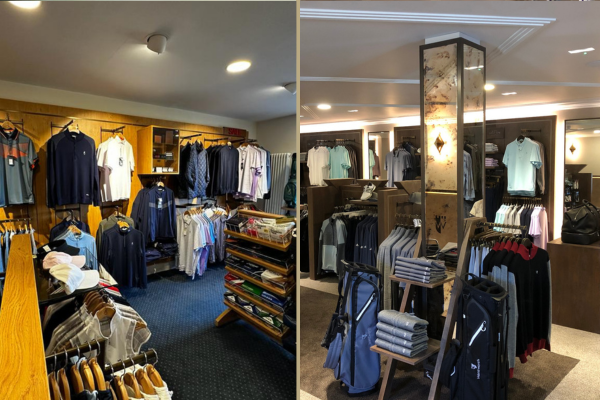
Classic golf shop design celebrates the traditions of the game. The UK is a country steeped in golfing history; from heritage clubs to world-renowned events, the history of golf is reflected in the premium, traditional clubs found across the country.
Often found within historic members’ clubs and established championship venues, these interiors create a feeling of heritage, craftsmanship and exclusivity.
Typical characteristics include:
- Rich timber cabinetry
- Traditional joinery
- Warm lighting
- Brass detailing
- Heritage-inspired display units
- Premium natural materials
- Elegant, understated merchandising
Rather than following retail trends, classic interiors focus on longevity and timeless quality. They celebrate a level of tradition and heritage, harking back to the history of golf as a sport.
For clubs with decades, or even centuries, of history, a traditional pro shop naturally complements the character of the clubhouse.
Best suited to:
- Private members’ clubs
- Historic golf clubs
- Championship venues
- Heritage clubhouses
- Clubs wanting a premium, timeless aesthetic
What Defines Contemporary Golf Retail?

Modern golf retail has evolved significantly over the past decade. With new technology, factors and trends, there is always a new element to discover in the modern golfing industry.
Today’s golfers increasingly expect open spaces, premium product presentation and technology-led experiences.
A contemporary golf shop typically includes:
- Clean architectural lines
- Minimalist displays
- Flexible merchandising systems
- Integrated lighting
- Custom fitting studios
- Swing rooms
- Digital displays
- Open retail layouts
The emphasis is on creating a bright, forward-thinking, and exciting environment where products become the focal point.
Contemporary spaces also adapt more easily to seasonal merchandising and changing product ranges, with a broader overall design that can retool around new events and seasons.
These designs are best suited to:
- Golf resorts
- Visitor-focused clubs
- Golf academies
- Modern developments
- Clubs investing in technology-led fitting
How Member Expectations Have Changed
Regardless of the style your club adopts, today’s golfers expect more from their pro shops.
Members increasingly value:
- Premium presentation
- Easy navigation
- Better product visibility
- Dedicated fitting experiences
- Comfortable consultation areas
- Technology integration
Despite the classical leanings, a beautifully crafted traditional-style pro shop can still deliver all these features while still adopting a classic look.
Likewise, a contemporary retail environment can still reflect the club’s heritage through carefully selected materials and finishes.
Ultimately, successful design is less about following trends and more about understanding how golfers interact with the space.
Comparing The Investment

One question clubs and vendors often ask is whether contemporary shopfitting costs more than traditional interiors.
The truth is that investment is influenced far more by the scope of the project than the chosen style of the pro shop.
Factors that affect project cost include:
- Size of the pro shop
- Bespoke joinery requirements
- Material selection
- Lighting specification
- Technology integration
- Custom fitting facilities
- Installation complexity
A handcrafted traditional interior with bespoke cabinetry may require a similar level of investment to a contemporary design incorporating premium finishes and integrated technology.
The focus should always be on long-term value rather than initial cost alone. This is a point we always stress at Millerbrown; ultimately, investing in a truly quality refurbishment will always deliver the best long-term investment and results.
Quality shopfitting is an investment designed to serve the club not just in the short term but for years to come.
Brand Positioning Starts Inside Your Pro Shop
Your retail environment tells visitors what type of club you are before any member of staff can say a word.
Ask yourself: Does the shop reflect the experience we promise?
For example: A prestigious links club may benefit from timeless craftsmanship that reinforces its heritage.
A modern golf destination may choose contemporary interiors that showcase innovation and performance.
Many successful clubs now blend both approaches. Natural timber finishes may sit alongside modern display systems. This retains a heritage look with the future-thinking ideas of contemporary design.
Traditional craftsmanship can be combined with custom fitting studios and launch monitor technology.
The result is a space that respects the club’s history while embracing the future of golf retail.
There Is No Right Answer, Only the Right Design for Your Club
The best golf pro shops don’t just copy other clubs’ unique style. They reflect their own identity.
Every refurbishment should begin by understanding:
- Your members
- Your visitors
- Your retail goals
- Your available space
- Your future ambitions
Only then should design decisions follow.
A successful shop isn’t defined by whether it’s classic or contemporary. It’s defined by how well it supports your golfers and your business.
How Millerbrown Helps Clubs Find the Right Balance
Every golf club offers a unique experience and brand identity. That’s why every Millerbrown project begins with understanding the club itself.
From traditional members’ clubs to contemporary golf resorts, each Millerbrown design delivers bespoke retail environments that reflect each club’s individual identity while supporting modern retail performance.
Whether the brief calls for handcrafted timber cabinetry, integrated custom fitting studios, premium merchandising solutions or a combination of traditional craftsmanship and contemporary retail design, every project is tailored to the way golfers use the space. The result is a pro shop that not only looks exceptional but performs as an important part of the overall club experience.
Conclusion
Choosing between classic and contemporary golf shop design isn’t about following trends and the latest ideas.
It’s about selecting the environment that best represents your club in the past, today and for the future.
When design aligns with your brand, members feel at home, visitors remember their experience, and retail spaces become destinations rather than simply places to purchase equipment.
Whether you’re preserving tradition or embracing a more contemporary approach, thoughtful design ensures your pro shop continues to add value for years to come.